Introduction

Watch any professional Counter-Strike player navigate a smoke-filled bombsite, and you'll witness something remarkable. They're not just reacting to what they see—they're operating from an intricate mental blueprint that tells them exactly where enemies could be hiding, which angles to pre-aim, and how the round will likely unfold. This invisible advantage separates elite competitors from everyone else.

Mental mapping isn't some mystical talent reserved for prodigies. It's a trainable cognitive skill that transforms how you perceive competitive environments. Whether you're pushing through a corridor in Valorant, reading a fast break in basketball, or anticipating your opponent's serve in tennis, your brain's ability to construct and manipulate spatial information determines your success rate.

In this comprehensive guide, we'll pull back the curtain on the mental mapping techniques used by professional esports players and elite athletes. You'll learn the science behind spatial cognition, discover training methods that actually work, and walk away with a concrete plan to develop these skills yourself. By the end, you'll understand why the best players seem to have eyes in the back of their heads—and how you can develop that same seemingly supernatural awareness.

Professional esports player analyzing game map on monitor with tactical overlay graphics
Elite players constantly build and update mental models of their competitive environment
Photo by Sigmund on Unsplash

What is Mental Mapping?

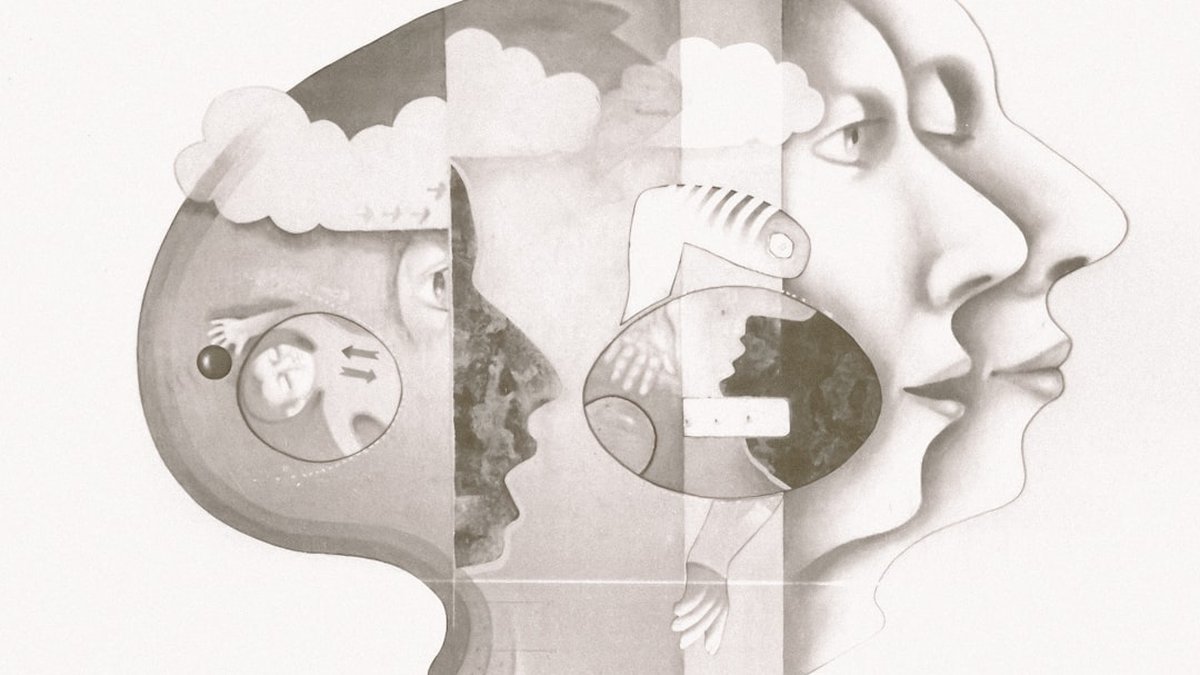
Mental mapping refers to your brain's ability to create, store, and manipulate internal representations of spatial environments. Think of it as building a three-dimensional model inside your head that you can rotate, zoom into, and update in real-time based on new information.

In competitive contexts, mental mapping encompasses several interconnected cognitive processes:

Spatial Memory stores the layout of environments—map geometry in video games, court dimensions in sports, or board positions in chess. This foundational layer lets you navigate without constantly looking at your surroundings.

Positional Tracking monitors where entities exist within your mental model. Pro players maintain awareness of teammate and enemy positions even when those players aren't visible, updating estimates based on sound cues, time elapsed, and behavioral patterns.

Predictive Modeling uses your spatial understanding to forecast future states. When a basketball point guard reads a developing play, they're running simulations in their mental map to predict where passing lanes will open.

Perspective Taking allows you to mentally view the environment from different angles—imagining what an opponent sees from their position, understanding sightlines you're exposed to, or visualizing how a play looks from the other side.

Research published in the Journal of Cognitive Neuroscience has shown that expert gamers demonstrate significantly enhanced spatial working memory compared to non-gamers. Their brains literally process spatial information more efficiently, with studies showing increased gray matter in regions associated with spatial navigation and attention.

Aspect Novice Player Expert Player
Map Knowledge Knows main pathways Understands every angle, timing, and pixel
Enemy Tracking Reacts to visible threats Maintains probability clouds of enemy positions
Prediction Range 1-2 seconds ahead 10-30 seconds ahead with multiple scenarios
Information Integration Processes serially Synthesizes audio, visual, and contextual cues simultaneously
Perspective Taking Limited to own viewpoint Fluidly switches between multiple perspectives

Why Mental Mapping Matters

The performance gap between players with strong mental mapping skills and those without is enormous—and it compounds at higher levels of competition. Here's why this cognitive skill matters so much.

Reaction Time Becomes Proaction Time

Human reaction time has a biological floor around 150-200 milliseconds for visual stimuli. No amount of training will let you react faster than your nervous system allows. But mental mapping lets you bypass this limitation entirely by predicting events before they happen.

When former CS:GO professional player Gabriel "FalleN" Toledo pre-aims a corner, he's not reacting to an enemy—he's positioning his crosshair where enemies statistically appear based on timing, sound cues, and his mental model of the round state. His effective "reaction time" appears superhuman because he's already prepared before the enemy becomes visible.

Cognitive Load Reduction

Your conscious attention is a limited resource. Players who haven't internalized their environment waste mental bandwidth on basic navigation and orientation. Those with developed mental maps operate on autopilot for routine spatial tasks, freeing cognitive resources for higher-level decision-making.

Research from the University of Rochester has demonstrated that action video game players show improved attention allocation and can track more objects simultaneously than non-players. Strong mental mapping skills are central to this cognitive advantage.

Information Asymmetry Exploitation

Competitive games are fundamentally about information. The player with better information makes better decisions. Mental mapping transforms scattered data points—a footstep sound, a missing enemy on the minimap, the time since the round started—into actionable intelligence.

Pro players describe this as "reading" the game. They're not guessing; they're making high-probability inferences based on their continuously updated mental model. When Faker makes a seemingly impossible prediction in League of Legends, he's synthesizing jungler pathing probabilities, lane states, ability cooldowns, and historical opponent tendencies into a coherent picture that tells him exactly when and where danger will emerge.

83%
Prediction Accuracy
Top-tier players correctly predict enemy positions over 80% of the time
2.3x
Faster Processing
Expert gamers process spatial information more than twice as fast
47%
Fewer Surprises
Players with strong mental maps get caught off-guard far less often
6+
Objects Tracked
Trained players can simultaneously track six or more moving elements

The difference between a good player and a great player is that the great player knows where everyone is going to be before they get there. You're not playing against what you see—you're playing against what you know.

Nikola "NiKo" Kovač
Professional Player, G2 Esports

How to Develop Mental Mapping Skills

Building powerful mental mapping abilities requires deliberate, structured practice. Here's the systematic approach used by professional players and sports psychologists to develop these skills.

Phase 1: Foundation Building (Weeks 1-4)

Before you can manipulate a mental map in real-time, you need to construct an accurate baseline representation. This phase focuses on deep environmental learning.

Offline Map Study: Spend time studying your game's environments outside of active play. For shooters, use custom lobbies to walk through every angle, measure timing routes, and identify pixel-perfect positions. For sports, visualize the court or field from different positions. Tools like Aim Lab offer spatial training modules specifically designed for this purpose.

Active Recall Practice: After playing, close your eyes and mentally reconstruct the environment. Can you visualize the exact position of every object? Can you trace routes through the space? Can you identify every sightline from a given position? This active recall strengthens neural pathways far more than passive exposure.

Verbalization Training: Describe environments out loud as you navigate them. "There's a corner to my left with a 45-degree angle, a window above that provides elevated sightlines, and a doorway 10 meters ahead with two exit routes." This verbalization forces conscious engagement with spatial details your brain might otherwise ignore.

Phase 2: Dynamic Tracking (Weeks 5-8)

Once your static map is solid, practice tracking moving elements within it.

Sound Mapping Drills: Play with your monitor off or eyes closed for short periods, using only audio to track positions on your mental map. Pro players can identify exact positions from footstep sounds alone because they've mapped acoustic signatures to locations.

Information Decay Exercises: When an enemy disappears from sight, consciously track where they could have moved to over time. Maintain a mental "probability cloud" that expands as time passes. Practice estimating how large that cloud should be based on maximum movement speed and available paths.

Teammate Tracking: Before checking your minimap, predict where your teammates are based on the game state. Then verify. This trains your brain to maintain parallel tracking processes for multiple entities.

0 of 6 completed 0%
  • Spend 30+ minutes exploring every angle without combat pressure

  • Close your eyes and rebuild the last match's key moments spatially

  • Watch replays specifically to analyze where enemies were that you didn't track

  • Verbally predict where enemies will appear before entering each area

  • Use sound cues exclusively to track positions on your mental map

  • Mentally view the environment from opponent and teammate perspectives

Phase 3: Predictive Modeling (Weeks 9-12)

Now integrate your spatial knowledge with behavioral prediction.

Pattern Recognition Training: Review professional matches or high-level gameplay with a specific focus on how experts predict enemy movements. Note the information they had available and the inferences they made. The HLTV demo viewer for Counter-Strike provides excellent tools for this analysis.

Scenario Simulation: Before rounds or plays begin, consciously run through 3-5 likely scenarios in your mental map. Where might enemies go? What information would confirm or eliminate each possibility? What would be your response to each scenario?

Temporal Modeling: Practice estimating timing—how long it takes to move between positions, when abilities come off cooldown, when rotations can complete. Your mental map should include a time dimension that lets you predict when events will occur, not just where.

Phase 4: Integration and Automation (Ongoing)

The final phase focuses on making mental mapping automatic so it doesn't consume conscious attention.

Dual-Task Training: Practice maintaining your mental map while performing other demanding tasks. Play aim training while tracking hypothetical enemy positions. This builds the parallel processing capability that experts demonstrate.

Speed Drills: Reduce the time between receiving information and updating your mental model. Practice snapping to the correct prediction immediately when new data arrives—a teammate calls an enemy position, and you should instantly know every angle that enemy can hold.

Competition Application: In actual competitive settings, designate specific triggers that prompt mental map updates. Every time you hear a sound cue, see a minimap blip, or notice a missing enemy, treat it as a mandatory update prompt.

Common Mistakes to Avoid

Even dedicated players often undermine their mental mapping development through these common errors. Recognizing these pitfalls will accelerate your progress.

Mistake 1: Relying Too Heavily on Visual Information

Many players only update their mental model when they directly see something. This creates massive blind spots. Your mental map should constantly evolve based on audio cues, timing, teammate information, and logical inference—not just your immediate visual field.

The Fix: Practice information integration from non-visual sources. Can you accurately track enemy positions in your mental map using only minimap, sound, and teammate callouts? If not, you're leaving critical data on the table.

Mistake 2: Static Map Syndrome

Some players learn map layouts but fail to develop dynamic tracking. They know where things are but not where things are going. Mental mapping isn't just spatial memory—it's a continuously updating simulation.

The Fix: After every piece of new information, consciously ask "How does this change my model?" Force yourself to propagate updates through your mental map rather than treating each data point in isolation.

Mistake 3: Overconfident Predictions

It's tempting to collapse your probability estimates into certainty—"The enemy IS in that corner." This leads to tunnel vision and surprise when predictions fail. Pro players maintain uncertainty appropriately, tracking multiple possibilities simultaneously.

The Fix: Think in probability distributions, not binary predictions. There's a 60% chance they're A, 30% chance they're B, 10% somewhere else. This mindset keeps you prepared for multiple scenarios and enables faster adaptation when the unexpected occurs.

Mistake 4: Neglecting the Time Dimension

Your mental map must include when, not just where. An enemy position from 30 seconds ago has massively different implications than one from 5 seconds ago. Players who don't track timing make predictions based on outdated information.

The Fix: Timestamp your mental updates. When you log an enemy position, note the time. As seconds pass, consciously expand the possible location radius based on maximum movement speed and available routes.

Mistake 5: Training Without Feedback

Mental mapping happens in your head, making it hard to evaluate accuracy. Without feedback, you might reinforce incorrect models. Many players think their predictions are better than they actually are.

The Fix: Create verification loops. Before checking corners, verbally predict what you'll find. Review replays to compare your mental model with reality. Track your prediction accuracy over time to measure genuine improvement.
Pros
  • Mental mapping skills transfer across games and sports with similar spatial demands
  • Improvements compound over time as neural pathways strengthen
  • Enhanced spatial cognition benefits real-world navigation and awareness
  • Provides advantages that pure mechanical skill cannot match
  • Reduces stress by increasing perceived control over competitive situations
Cons
  • Requires consistent deliberate practice—passive playing won't develop these skills
  • Initial training may temporarily reduce performance as you split attention
  • Game updates that change maps require relearning spatial details
  • Overconfidence in predictions can lead to over-commitment to wrong reads
  • Skills are game-specific and don't fully transfer between very different titles

Best Practices from Professional Players

We've compiled insights from professional players across esports and traditional sports to distill the most effective mental mapping practices.

Pre-Game Visualization Rituals

Nearly every pro player we've studied engages in pre-match visualization. This isn't vague positive thinking—it's specific spatial rehearsal. Before matches, many esports organizations now employ sports psychologists who guide players through visualization protocols.

Implementation: Spend 5-10 minutes before competitive sessions mentally walking through likely scenarios. Visualize common situations from both your perspective and your opponent's. Run through your responses to different enemy setups. This primes your mental map and reduces surprise during actual play.

The "What If" Framework

Top players constantly ask "What if?" during gameplay. What if the enemy rotates now? What if they push this angle? What if my teammate goes down? This continuous questioning keeps their mental model flexible and prepared for multiple futures.

Implementation: Make "what if" thinking habitual. In any moment of relative safety, run a quick what-if analysis. Identify the highest-probability threats and ensure you have a response planned. This transforms reactive gameplay into proactive preparation.

Information Sharing Protocols

In team environments, mental mapping extends beyond individual cognition. The best teams develop systematic information-sharing protocols that ensure every player's mental model stays synchronized.

Implementation: Develop standardized callouts with your team that efficiently communicate position, timing, and certainty level. "One short, five seconds ago, definitely" packs more useful information than "I saw someone." Practice until these protocols become automatic.

Post-Match Mental Autopsies

Professional players review their mental mapping failures rigorously. When they get surprised or make a bad read, they trace back through their mental model to identify where the error occurred. Was it missing information? Wrong inference? Outdated tracking?

Implementation: After sessions, identify 2-3 moments where your mental map failed. For each, determine the root cause. Were you missing crucial information? Did you fail to update based on available cues? Did you collapse uncertainty too early? This targeted analysis drives rapid improvement.

Cross-Training Mental Flexibility

Many pros play multiple games or engage in other strategic activities to build mental flexibility. Playing different games that require mental mapping—even chess or strategy games—strengthens underlying cognitive infrastructure.

Implementation: Dedicate some practice time to games that stress different aspects of mental mapping. Real-time strategy games build multi-entity tracking. Turn-based games develop deep positional analysis. Fighting games train predictive modeling in 1v1 scenarios.

The Minimap Discipline

Elite players glance at their minimap approximately once every 2-3 seconds—far more frequently than casual players. But it's not just frequency that matters; it's what they extract from each glance.

Professional players process minimap information in a single fixation, immediately integrating updates into their mental model. They notice absences—where enemies aren't on the map—as much as presences. The minimap becomes a continuous data feed that keeps their mental model synchronized with reality.

To develop this discipline, start by setting explicit goals for minimap check frequency. Use a metronome app or interval timer initially to build the habit. Gradually, the behavior becomes automatic, and you'll find yourself glancing at the minimap without conscious effort, each glance instantly updating your mental picture of the game state.

I don't aim better than other players. I just know where to aim before they do. The mental game is 80% of high-level competition—mechanics are the easy part.

Mathieu "ZywOo" Herbaut
Professional Player, Team Vitality

Training Tools and Resources

Several tools can accelerate your mental mapping development beyond pure in-game practice.

Cognitive Training Applications

Aim Lab: While primarily known for aim training, Aim Lab includes spatial cognition modules that train tracking and positional awareness. Their "Gridshot" and tracking tasks build the foundational ability to monitor multiple objects spatially.

BrainHQ: Developed by neuroscientists, BrainHQ offers exercises specifically designed to improve spatial memory and attention. Their "Double Decision" and "Target Tracker" exercises translate well to gaming mental mapping demands.

Lumosity: Contains spatial reasoning games that strengthen the general cognitive infrastructure underlying mental mapping. Particularly useful for beginners building foundational spatial skills.

Game-Specific Tools

Demo Review Software: Most competitive games offer replay systems. Use them religiously. Leetify for CS2 provides specific spatial analysis, showing you where you died to enemies you weren't tracking.

Custom Map Workshops: Games like CS2 and Valorant have community-created training maps designed for learning angles, timings, and positions. Seek these out and incorporate them into your practice routine.

Tracking Overlays: Some practice tools let you visualize enemy position probability on screen. While you shouldn't use these in competition, training with them builds intuition for spatial probability that carries over.

Physical Training Connections

Research from Human Kinetics publications shows that physical activity—particularly sports requiring spatial awareness—improves cognitive spatial abilities. Table tennis, basketball, and soccer have been specifically linked to enhanced spatial cognition in gamers.

Consider cross-training with physical activities that demand spatial awareness. The neural pathways overlap significantly, and the physical health benefits compound with cognitive gains.

Tool Best For Time Investment Cost
Aim Lab Tracking multiple targets, spatial reflexes 15-30 min/day Free (Premium available)
BrainHQ Foundational spatial cognition training 20 min/day $14/month
Demo Reviews Identifying specific mental mapping failures 30-60 min/session Free
Custom Training Maps Learning specific game environments 15-20 min/day Free
Physical Sports Cross-training spatial awareness Varies Varies

Frequently Asked Questions

Most players notice meaningful improvement within 4-6 weeks of dedicated practice, with significant gains appearing around the 3-month mark. However, elite-level mental mapping develops over years of deliberate practice. The key is consistent, structured training rather than hoping passive play will develop these skills. Even professional players continue refining their mental mapping abilities throughout their careers, as game updates and meta shifts require continuous adaptation.

Core cognitive abilities—spatial working memory, multi-object tracking, predictive modeling—transfer well between games with similar demands. A strong FPS mental mapper will adapt faster to a new shooter than someone without those skills. However, game-specific knowledge (exact map layouts, character abilities, timing routes) must be learned fresh. Think of it like learning languages: knowing one Romance language makes learning another easier, but you still need to learn the new vocabulary and grammar.

No innate talent is required. Research consistently shows that spatial cognition improves with training, regardless of baseline ability. Some people may start with stronger natural spatial skills, but the ceiling for improvement is high for everyone. Studies of London taxi drivers, who develop exceptional spatial memory through navigation demands, demonstrate that intensive practice can physically increase brain regions associated with spatial cognition. Anyone willing to train deliberately can develop strong mental mapping skills.

Both matter, but the optimal balance depends on your current level. Beginners should focus primarily on basic mechanics until those become comfortable, then shift attention to mental mapping. Intermediate players often benefit most from mental mapping training, as their mechanics are adequate but game sense limits their performance. At high levels, mental mapping becomes the primary differentiator—most players have similar mechanical abilities, and the advantage goes to whoever reads the game better.

Track objective metrics: How often do enemies surprise you from positions you didn't anticipate? What percentage of your pre-aim predictions are correct? How frequently do you need to check your minimap versus knowing teammate positions automatically? Review demos and count mental mapping failures per game. As you improve, you'll find yourself saying 'I knew they'd be there' more often and 'I had no idea' less frequently. Some tracking tools like Leetify provide statistical analysis of deaths to unseen enemies, giving you concrete improvement metrics.

Conclusion

Mental mapping separates players who react from players who predict. It's the invisible skill that makes professional players appear to have superhuman awareness, letting them pre-aim corners before enemies appear and rotate to threats before they materialize.

The good news is that mental mapping is trainable. Through systematic practice—building accurate spatial representations, developing dynamic tracking habits, and refining predictive modeling—you can develop the same cognitive advantages that define elite play. The process requires deliberate effort beyond passive playing, but the payoff is substantial: not just better game performance, but enhanced spatial cognition that benefits you in countless real-world situations.

Start with the foundations. Learn your environments deeply. Practice tracking entities you can't see. Run scenarios in your head before they unfold. Make mental mapping practice as intentional as aim training. Within weeks, you'll notice improvements in how you perceive competitive environments.

The players who consistently win at the highest levels aren't just mechanically superior. They understand space, time, and probability in ways that let them play the game several moves ahead. Now you have the framework to develop those same abilities. The only question is whether you'll put in the deliberate practice required to achieve them.

Ready to Elevate Your Competitive Edge?

Mental mapping is just one component of strategic mastery. Explore our complete library of guides covering game sense, decision-making frameworks, and cognitive performance optimization for competitive players.

Browse Strategy Guides