There's a moment in every Pandemic Legacy campaign when your team stares at the board in disbelief. Cities are crumbling, outbreaks are cascading across continents, and that permanent sticker you placed three games ago suddenly feels like the worst decision you've ever made. The beauty and terror of Pandemic Legacy lies in its permanence—every choice echoes through all twelve months of your campaign.
Unlike standard Pandemic, where a bad game means shuffling the cards and trying again, Pandemic Legacy demands strategic thinking that spans sessions. The decisions you make in March will haunt or help you in December. Characters can be lost forever. Cities can fall into ruin. And once you rip up that card, there's no going back.
This guide will transform how you approach cooperative legacy gaming. You'll learn the critical decision-making frameworks that separate campaign winners from those who watch their world burn, discover how to optimize your team composition for maximum effectiveness, and understand the resource management principles that keep you ahead of the disease curve. Whether you're about to crack open a fresh Season 1 box or looking to improve your Season 2 performance, these strategies will give your team the edge needed to save humanity.
A typical Pandemic Legacy session setup—every element on this board tells the story of your campaign's history
Photo by Sincerely Media on Unsplash
What is Pandemic Legacy and Why Does Strategy Matter More?
Pandemic Legacy takes the beloved cooperative disease-fighting mechanics of Pandemic and wraps them in an evolving narrative where your choices permanently alter the game. Designed by Rob Daviau and Matt Leacock, this legacy-style board game unfolds over 12-24 game sessions representing months in a year-long battle against global pandemics.
What makes strategy fundamentally different in Pandemic Legacy compared to standard Pandemic? Three critical factors:
Permanent Consequences: When you place a sticker, tear a card, or write on the board, those changes persist for every future game. A city that falls into chaos stays chaotic. A character who gains a scar carries that penalty forever. This permanence means short-term tactical decisions must be weighed against long-term strategic implications.
Evolving Rules: New mechanics, objectives, and challenges emerge as you progress through the campaign. Strategies that dominated early months may become obsolete or even counterproductive as the game state changes. Adaptability becomes as important as initial planning.
Resource Scarcity Across Sessions: Unlike standalone games where resources reset, Pandemic Legacy features persistent resources that must be budgeted across your entire campaign. Burning through your upgrades early leaves you vulnerable when challenges escalate.
Factor
Standard Pandemic
Pandemic Legacy
Game Reset
Full reset after each play
Permanent changes carry forward
Character Loss
Characters always available
Characters can be lost forever
Strategic Depth
Single-session optimization
Campaign-long planning required
Mistake Impact
Try again next game
Mistakes compound over time
Rule Complexity
Static ruleset
Evolving rules and objectives
Understanding these differences is crucial because they fundamentally change what "good strategy" means. In standard Pandemic, aggressive risk-taking might be optimal since failure just means another attempt. In Pandemic Legacy, conservative play that preserves options often outperforms flashy tactics that work brilliantly—until they don't.
Why Pandemic Legacy Strategy Matters for Campaign Success
Many groups approach Pandemic Legacy with the same mindset they bring to regular board game nights: show up, make decisions that feel right in the moment, and hope for the best. This approach almost guarantees a frustrating experience by mid-campaign when accumulated small mistakes create seemingly insurmountable challenges.
Strategic thinking in Pandemic Legacy matters because the game is specifically designed to punish reactive play and reward proactive planning. The designers built escalating difficulty curves that assume players are learning and improving. Fall behind that curve, and you'll face a compounding difficulty spiral.
Consider the mathematics of campaign momentum. Each game you lose forces a replay of that month, consuming resources and potentially adding negative legacy elements to your board. These penalties make the next attempt harder, increasing the likelihood of another loss. Groups that enter this spiral often report feeling like the game became "unfair" or "broken," when in reality, early strategic missteps created the conditions for later failure.
70%
Win Rate Target
Aim to win at least 7 of 10 games on first attempt
2-3
Acceptable Retries
Budget for replaying 2-3 months maximum
4+
Players Recommended
Optimal team size for action economy
12-24
Total Sessions
Expected games to complete campaign
The benefits of strategic play extend beyond simply winning more games:
Narrative Satisfaction: Pandemic Legacy tells a story, and that story is far more compelling when you're succeeding. Watching your team competently handle crises creates heroic moments, while constant failure makes the narrative feel punishing rather than dramatic.
Resource Preservation: Strategic play conserves the limited upgrades, funding, and special abilities available throughout the campaign. This reservoir of resources provides flexibility when facing unexpected challenges in later months.
Reduced Table Tension: Cooperative games can create interpersonal friction when things go wrong. Strategic frameworks give teams a shared decision-making language that reduces arguments and finger-pointing.
Replayability: While Pandemic Legacy is technically a "one and done" experience, groups that play well often want to try the other seasons or restart with different strategic approaches. Poor experiences, conversely, can sour players on the entire legacy concept.
How to Build a Winning Pandemic Legacy Strategy
Developing effective Pandemic Legacy strategy requires thinking across multiple time horizons simultaneously: the immediate turn, the current game, and the overall campaign. Here's how to build a comprehensive strategic approach that addresses all three levels.
Phase 1: Pre-Campaign Preparation
Before you even open the box, establish your team's strategic foundation:
Commit to Consistent Players: Pandemic Legacy works best with the same 3-4 players throughout the campaign. Knowledge continuity matters—players who understand your board's history make better decisions. If someone must miss a session, brief them thoroughly before the next game.
Establish Decision-Making Protocols: Agree in advance how your group will handle disagreements. Will you vote? Defer to specific expertise? Use a rotating "captain" system? Having this framework prevents heated arguments when stakes are high.
Create a Campaign Log: Beyond the game's built-in legacy deck, maintain your own notes. Track which cities have been problematic, which character combinations worked well, and what strategies succeeded or failed. This institutional memory becomes invaluable in later months.
Track strategies, city histories, and lessons learned
Momentum matters—long gaps between sessions hurt performance
No looking ahead in the legacy deck or online
Phase 2: Character Role Optimization
Character selection and development might be the single most impactful strategic decision in Pandemic Legacy. Unlike standard Pandemic where you might casually grab whichever role sounds interesting, legacy play demands intentional team composition.
Core Team Principles:
Your team needs coverage across three critical functions: disease management, mobility, and information/flexibility. A balanced team might include:
Disease Management: Medic or characters with treatment bonuses
Mobility: Dispatcher or characters enabling rapid repositioning
Flexibility: Researcher, Scientist, or adaptable roles
Avoid doubling up on similar functions unless the game state specifically demands it. Two characters focused on treatment means neither handles logistics or information well.
Character Investment Strategy:
When upgrading characters, resist the temptation to create one "super character" with all the best abilities. Instead, distribute upgrades to create a resilient team where losing any single character doesn't cripple your capabilities. This redundancy principle protects against the permanent character loss that can occur in Pandemic Legacy.
Phase 3: Resource Management Across Sessions
Pandemic Legacy provides various resources—upgrades, funding levels, special abilities—that must last your entire campaign. Mismanaging these resources is one of the most common strategic failures.
The Conservation Principle: Only spend resources when they provide decisive advantage, not marginal improvement. Ask before each expenditure: "Can we win this game without using this?" If yes, save it.
Funding Management: Your funding level determines available upgrades between games. Winning games on the first attempt preserves funding better than grinding through retries. Sometimes accepting a slightly harder current game preserves resources for future months.
Upgrade Prioritization: Not all upgrades are equal. Prioritize in this order:
Mobility upgrades (action economy multipliers)
Information upgrades (reduce uncertainty)
Treatment upgrades (efficient disease management)
Situational abilities (only when specifically needed)
Within each game, use this decision hierarchy to evaluate your options:
Priority 1 - Prevent Outbreaks: Outbreaks create permanent board damage and cascade into further outbreaks. Preventing outbreaks takes precedence over almost everything else.
Priority 2 - Cure Diseases: Curing diseases is your win condition. Every action that doesn't contribute to cures or outbreak prevention should be questioned.
Priority 3 - Position for Future Turns: Set up efficient future turns by strategic movement and card management. The best players think 2-3 turns ahead.
Priority 4 - Gather Information: When safe, use actions to improve your understanding of the infection deck order and upcoming challenges.
Phase 5: Outbreak Pattern Prediction
The infection deck in Pandemic Legacy isn't random—it follows predictable patterns that strategic players exploit. After each epidemic, the discard pile gets shuffled and placed on top of the infection deck. This means recently infected cities will be infected again soon.
Tracking the Infection Deck: Maintain mental (or written) awareness of which cards have been drawn and which remain. When an epidemic hits, you know exactly which cities are at risk in the next few turns.
Pre-positioning for Epidemics: When the epidemic timing feels imminent (based on player deck depletion), position team members near likely outbreak locations. The Dispatcher role excels at this rapid-response positioning.
Managing High-Risk Cities: Cities that appear multiple times in the infection deck are mathematically more likely to cause problems. Prioritize keeping these cities at zero cubes when possible, even if it means letting "safer" cities accumulate cubes.
Common Pandemic Legacy Mistakes to Avoid
Learning from others' mistakes is far less painful than making them yourself, especially when those mistakes permanently damage your game board. Here are the most common strategic errors that derail Pandemic Legacy campaigns.
Mistake #1: Tunnel Vision on Current Objectives
Every month introduces new objectives and story elements. It's natural to focus intensely on whatever the game is currently asking you to do. However, this tunnel vision causes players to ignore accumulating problems elsewhere on the board.
The Fix: Before each turn, do a full board scan. Check every city with two or more cubes. Verify no chain outbreak scenarios are developing. Only then focus on objectives. The objectives don't matter if you lose to outbreaks.
Mistake #2: Hoarding Cards Too Long
Players often hold cards hoping to complete a cure "next turn" or waiting for the perfect moment. Meanwhile, cities fall into chaos because those cards could have enabled critical actions.
The Fix: Cards serve two purposes—curing diseases and enabling charter flights/building research stations. Don't let cards sit unused for multiple rounds. If you've held a card for three full turns without using it, seriously question whether it's serving your strategy.
Mistake #3: Undervaluing the Dispatcher
New players often overlook the Dispatcher, finding direct disease treatment more satisfying. This is a massive strategic error. The Dispatcher's ability to move other players effectively multiplies your team's action economy.
The Fix: Recognize that the Dispatcher enabling another player to treat a distant disease is often better than the Dispatcher treating a nearby disease. Movement is the scarcest resource in Pandemic; the Dispatcher alleviates that scarcity.
Mistake #4: Spreading Upgrades Too Thin
When upgrades become available, groups often distribute them "fairly" so everyone gets something. This creates a team of mediocre characters rather than specialized experts.
The Fix: Accept that some characters should receive more upgrades than others based on their roles. Your primary disease manager needs treatment upgrades more than your Dispatcher does. Specialization beats equality.
Pros
Playing conservatively preserves resources for later months
Distributing characters across the board prevents clustering
Trading cards early enables faster cures
Saving upgrades for desperate moments provides insurance
Accepting first-attempt losses when ahead preserves resources
Cons
Over-conservatism leads to losing games you could have won
Spreading too thin leaves nobody positioned for crises
Hoarding cards waiting for perfect trades
Never using upgrades because 'we might need them later'
Refusing to retry winnable months due to resource obsession
Mistake #5: Ignoring Early-Game City Damage
In early months, when the game feels manageable, players often accept city damage or outbreaks as acceptable losses. "It's only January, we have plenty of time to recover." This thinking is catastrophic.
The Fix: Treat early-game city damage as extremely serious. That city will cause problems for your entire campaign. The effort to prevent early damage almost always costs less than the cumulative penalty of playing with a damaged board for 10+ more games.
Mistake #6: Poor Communication During Play
Pandemic Legacy is cooperative, but many groups play with minimal communication. Players make decisions in their heads, announce actions, and move on. This leaves massive strategic potential untapped.
The Fix: Verbalize your thinking before acting. "I'm considering moving to Hong Kong because I think we need presence in Asia, but I could also trade this card to Sarah. What does the team think?" This invites input and catches errors before they become permanent mistakes.
Best Practices for Pandemic Legacy Campaign Success
Beyond avoiding mistakes, elite Pandemic Legacy players employ specific best practices that maximize their campaign success rates. Implement these recommendations to elevate your strategic play.
Master the Action Economy
Every player gets four actions per turn. Exceptional teams extract maximum value from every single action. This means:
Minimize wasted movement: Plan routes that accomplish multiple objectives
Leverage special abilities: Character abilities that save actions are incredibly valuable
Coordinate handoffs: Position for efficient card trading rather than chasing each other around the board
Build strategic research stations: Stations aren't just for curing—they're movement infrastructure
A useful benchmark: if any player ends their turn with unused actions or takes a "skip" action, examine whether better coordination could have utilized that action productively.
Implement the Three-Cube Rule
The Three-Cube Rule is a simple heuristic that prevents most outbreak cascades: never let a city reach three cubes unless you have a specific plan to address it within the next two turns.
Three cubes means one more infection causes an outbreak. Outbreaks cascade. Cascades end campaigns. By treating three cubes as an emergency requiring immediate response, you prevent the chain reactions that lose games.
Develop Epidemic Protocols
When an epidemic card appears, your team should have a practiced response:
Identify the epidemic city and assess immediate threat
Shuffle discard pile (game mechanism)
Immediately discuss which recently-infected cities are now on top of the infection deck
Assess whether current positions can address the incoming infections
If necessary, use remaining actions to reposition for outbreak prevention
This systematic response prevents the panic-driven mistakes that often accompany epidemic cards.
0 of 6 completed
0%
Before each session, review current board state, city damage, and available resources
Each player should know their primary function for the upcoming game
Agree to verbalize thinking before taking actions
Maintain awareness of which cards have been drawn
Discuss what worked, what didn't, and lessons for next session
Record important events, strategic insights, and city status changes
Strategic Use of the Contingency Planner
If your version includes the Contingency Planner role, this character offers unique strategic depth. The ability to reuse event cards can be game-changing, but requires planning.
Best Event Cards to Recycle:
- Airlift (emergency repositioning)
- Government Grant (strategic station placement)
- One Quiet Night (epidemic recovery time)
Position the Contingency Planner to grab these cards immediately after use, before they're buried in the discard pile.
Balance Aggression and Caution
The best Pandemic Legacy players know when to push and when to consolidate. General guidelines:
Play Aggressively When:
- You're ahead on cures and the board is stable
- Specific legacy objectives have time pressure
- You have unused event cards providing safety nets
Play Cautiously When:
- Multiple cities are at two or three cubes
- Epidemic timing suggests one is imminent
- You've already used key event cards
- Campaign resources are running low
The best Pandemic Legacy players don't just react to what the game throws at them—they anticipate it. They're treating the crisis that hasn't happened yet because they saw it coming three turns ago.
Matt Leacock
Co-Designer, Pandemic Legacy
Leverage the "Two Win" Buffer
Pandemic Legacy's difficulty adjusts based on your performance. Losing gives you additional resources for the retry. This creates a strategic consideration: sometimes a first-attempt loss that positions you better for the retry is acceptable.
However, don't abuse this. The game also tracks total losses, and accumulated losses create long-term penalties. The ideal is winning first attempts while accepting that occasional retries are part of the expected experience.
Protect Your Most Upgraded Character
As your campaign progresses, characters accumulate upgrades that make them increasingly valuable. Identify which character has received the most investment and play somewhat conservatively with them. The permanent loss of a heavily-upgraded character can cripple campaign prospects.
This doesn't mean avoiding all risk—it means ensuring that character isn't unnecessarily exposed when other characters could handle dangerous situations instead.
Frequently Asked Questions About Pandemic Legacy Strategy
Four players is generally considered optimal for Pandemic Legacy campaigns. With four players, you maximize action economy—sixteen total actions per round compared to twelve with three players or eight with two. More actions means more flexibility to handle both objectives and outbreak prevention simultaneously. However, three players works well and offers easier scheduling. Two players can succeed but requires each player to control two characters, which increases cognitive load and can reduce the cooperative discussion that makes the game enjoyable.
Start with Season 1. While Season 2 isn't a direct narrative sequel requiring Season 1 knowledge, the mechanical complexity of Season 2 assumes familiarity with legacy game concepts that Season 1 teaches gradually. Season 1's learning curve is gentler, introducing permanent changes and evolving rules in a more structured way. Players who jump directly to Season 2 often feel overwhelmed by its exploration mechanics and hidden information systems. Complete Season 1, then decide if you want the different challenge that Season 2 offers.
Expect 12-24 gaming sessions of 60-90 minutes each, totaling roughly 15-30 hours of play. The campaign covers twelve months, but you get two attempts per month—meaning you could complete it in exactly 12 games if you win every first attempt, or up to 24 games if you need every retry. Most groups fall somewhere in between, finishing in 14-18 sessions. Schedule regular sessions rather than marathon days; the game benefits from time between sessions to process what happened and strategize for upcoming challenges.
Yes, absolutely. Pandemic Legacy includes catch-up mechanisms specifically because the designers knew players would make mistakes. Losing games grants additional resources and funding for retries. The game dynamically adjusts to keep campaigns winnable even after significant setbacks. That said, early mistakes make later months harder and reduce your margin for error. If your campaign feels nearly impossible, focus on maximizing the loss benefits—sometimes losing strategically to gain resources, then winning the retry with those additional tools, is the path forward.
General strategy principles—like those in this guide—enhance the experience without spoiling it. Understanding concepts like action economy, outbreak prevention priority, and resource management helps you make better decisions without revealing specific story beats or mechanical surprises. However, avoid guides that discuss specific legacy deck contents, plot developments, or month-by-month spoilers. The joy of Pandemic Legacy comes partly from discovering what happens next. Learn how to think strategically, but preserve the narrative surprises.
Conclusion
Pandemic Legacy offers one of board gaming's most memorable experiences—a campaign where your decisions matter permanently, where your team builds a shared history with every session, and where strategic thinking directly translates to narrative success. The strategies outlined in this guide will help you approach that experience with the tools needed to thrive.
Remember the core principles: think across multiple time horizons, from immediate turn decisions to campaign-long resource management. Optimize your character team composition rather than treating role selection casually. Prevent outbreaks above almost all other priorities. Communicate thoroughly with your team, and maintain records that preserve institutional knowledge between sessions.
Most importantly, embrace the permanence that makes Pandemic Legacy special. Yes, mistakes have lasting consequences—but so do victories. Every city you save, every disease you cure, every month you conquer on the first attempt becomes part of your campaign's unique story. That board, with all its stickers and marks and history, represents something no other group will ever replicate.
Gather your team, establish your protocols, and prepare to save humanity. With strategic thinking and coordinated play, your Pandemic Legacy campaign can become the triumph it deserves to be. The world is counting on you—play wisely.
Ready to Master More Strategic Games?
Explore our complete guides to cooperative board games, competitive strategy titles, and tabletop tactics that will make you the most strategic player at any table.
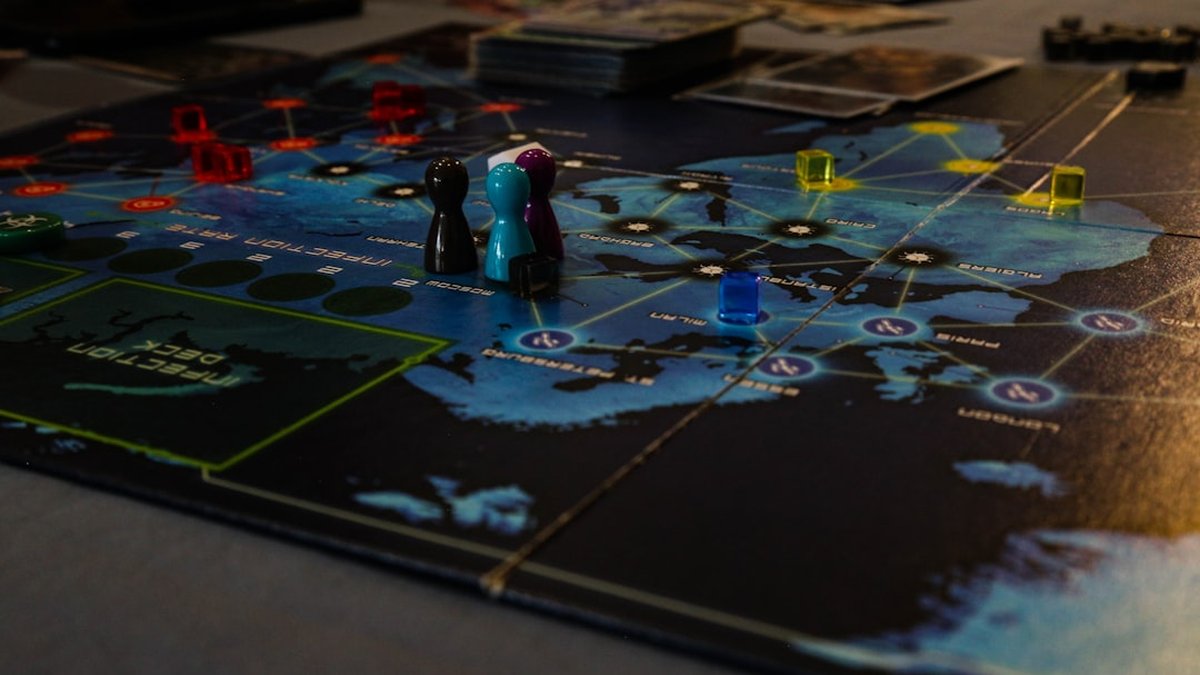 Photo by

Comments
No comments yet. Be the first to comment!
Leave a Comment