Introduction

The difference between victory and defeat often comes down to milliseconds. Whether you're countering an opponent's move in a fighting game, returning a serve in tennis, or making a split-second call in poker, your reaction time determines your competitive edge. But here's what most players don't realize: reaction speed isn't just about physical reflexes—it's primarily a mental game.

Professional esports athletes and Olympic competitors don't simply have faster nervous systems than the rest of us. They've trained their minds to process information more efficiently, anticipate outcomes before they happen, and eliminate the mental friction that slows down response times. The good news? These same techniques are learnable, and they work across every competitive discipline.

In this comprehensive guide to reaction time training, we'll explore five scientifically-backed mental techniques that can shave precious milliseconds off your response time. You'll learn how professional gamers achieve seemingly superhuman reflexes, why traditional "reaction training" often fails, and how cognitive conditioning creates lasting improvements that transfer across multiple games and sports. By the end, you'll have a complete toolkit for training your mind to respond faster than ever before.

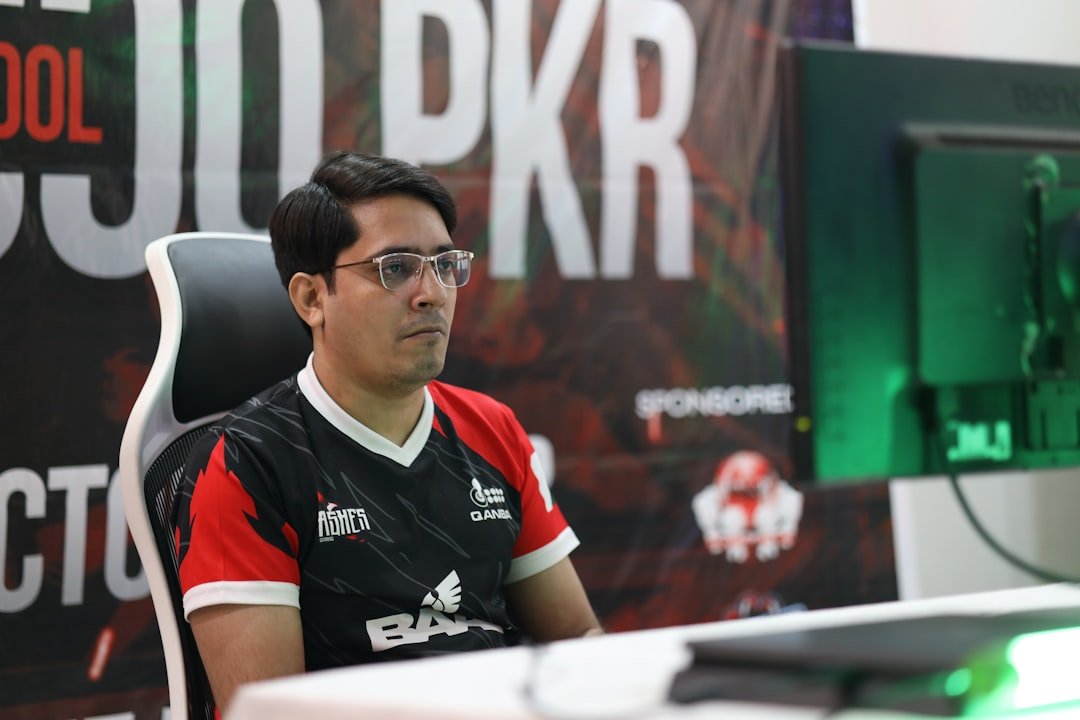
Professional esports player with intense focus during competitive gaming match showing concentration and quick reflexes
Elite competitors train their minds as rigorously as their mechanical skills
Photo by Arcade Arena on Unsplash

What is Reaction Time Training?

Reaction time training encompasses any method designed to reduce the delay between perceiving a stimulus and executing a response. While this might sound straightforward, the science behind it reveals a complex interplay between perception, cognition, and motor execution.

According to research published in the Journal of Cognitive Enhancement, human reaction time consists of three distinct phases: stimulus detection (when your senses register something has happened), cognitive processing (when your brain interprets the stimulus and selects a response), and motor execution (when your body carries out the chosen action). Traditional training often focuses only on the motor execution phase, which is why many people hit frustrating plateaus.

The mental techniques we'll explore target the cognitive processing phase—the area where the most significant gains are possible. Research from Stanford University's Human Performance Lab has shown that cognitive training can reduce processing time by 10-15%, translating to improvements of 20-50 milliseconds in real-world scenarios. That might not sound like much, but in competitive environments, it's often the difference between first and second place.

150-300ms
Average Human Reaction Time
Visual stimulus to physical response
10-15%
Potential Improvement
Through cognitive training methods
120-180ms
Pro Gamer Reaction Time
Achieved through dedicated training
8 weeks
Training Timeline
To see measurable improvements

It's crucial to understand what reaction time training is not. It's not about developing supernatural reflexes or somehow speeding up your nervous system's electrical signals. Instead, it's about optimizing how your brain processes information, reducing decision-making overhead, and preparing your mind to respond efficiently to anticipated scenarios.

The five mind tricks we'll cover work by addressing different bottlenecks in the cognitive processing chain. Some help you detect stimuli faster, others reduce decision-making time, and still others prepare your motor system to execute responses more efficiently. Used together, they create a comprehensive approach to reaction time improvement that delivers results across gaming, sports, and everyday life.

Why Reaction Time Training Matters

In competitive environments, reaction time often determines outcomes more than any other single factor. Consider the numbers: in first-person shooters, the player who aims and fires first wins approximately 70% of equal-skill encounters. In tennis, returning a 120 mph serve gives you roughly 400 milliseconds to track the ball, decide where it's going, and position your racket—and professional players consistently succeed because they've optimized every phase of that process.

But reaction time training benefits extend far beyond winning games. Research published in Frontiers in Psychology demonstrates that improved reaction time correlates with better driving safety, reduced workplace accidents, and enhanced performance in any task requiring quick decisions under pressure. When you train your reactions, you're not just becoming a better player—you're upgrading your brain's fundamental processing capabilities.

Scenario Untrained Response Trained Response
FPS Encounter 250-300ms aim time 150-200ms aim time
Fighting Game Punish Miss 60% of opportunities Convert 85%+ consistently
Tennis Return Late contact, defensive return Early contact, offensive options
Poker Decision Visible hesitation tells Consistent timing, masked decisions
Racing Start 0.3-0.4s off the line 0.15-0.2s reaction to lights

The competitive advantage compounds over time. In a best-of-five match, even a small reaction time edge creates dozens of micro-advantages that accumulate into a significant overall benefit. Professional players understand this intuitively, which is why reaction time training has become a standard component of esports training regimens at organizations like T1, Cloud9, and Team Liquid.

Perhaps most importantly, reaction time training provides transferable skills. The mental techniques you develop for gaming apply directly to sports, and vice versa. Players who train systematically report improvements across all their competitive pursuits, not just the specific discipline they trained for. This cross-domain transfer makes reaction time training one of the highest-value investments you can make in your overall competitive development.

Mind Trick #1: Predictive Processing and Pattern Recognition

Here's a counterintuitive truth: the fastest reaction isn't a reaction at all—it's a prediction. Elite competitors don't wait for events to happen and then respond; they anticipate what's coming and pre-load their responses. This technique, known as predictive processing, is the single most powerful method for improving apparent reaction time.

Your brain is constantly running predictive models about what will happen next. When you watch a basketball player shoot, your brain predicts the ball's trajectory before it even leaves their hands. Predictive processing training strengthens these predictive models, allowing you to "see" events earlier and prepare responses before the stimulus fully occurs.

The key to developing predictive processing is deliberate pattern study. In any competitive discipline, actions follow patterns. Fighting game players have preferred combo routes. Tennis players telegraph serves with their toss. Poker players exhibit timing tells. By systematically studying these patterns, you train your brain to recognize them earlier in their execution.

0 of 5 completed 0%
  • Watch specifically for patterns in opponent behavior, looking for telegraphed moves and habitual responses

  • Document common situations and their most likely outcomes based on your observations

  • Watch matches and verbally predict what will happen next, training recognition without motor interference

  • Identify specific visual or audio cues that indicate incoming actions, and consciously watch for them

  • Apply your pattern recognition in practice matches before relying on it in competitive play

Professional Street Fighter players demonstrate predictive processing mastery. When you watch high-level play, you'll notice players blocking attacks that seem impossible to react to. That's because they're not reacting—they're predicting based on spacing, opponent tendencies, and game state. Studies of professional players show they begin their defensive inputs before the opponent's attack animation starts, based purely on contextual prediction.

To train predictive processing, dedicate time to pure observation. Watch high-level gameplay or matches without playing, focusing entirely on predicting what will happen next. Keep a mental (or written) tally of your prediction accuracy. Over time, you'll notice your accuracy improving, and more importantly, you'll find yourself making these predictions automatically during your own competitive play.

The critical insight is that prediction doesn't require certainty. You're not trying to know exactly what will happen—you're trying to narrow down the possibilities so your brain can pre-load appropriate responses. Even reducing options from ten to three dramatically speeds up your effective reaction time when the actual event occurs.

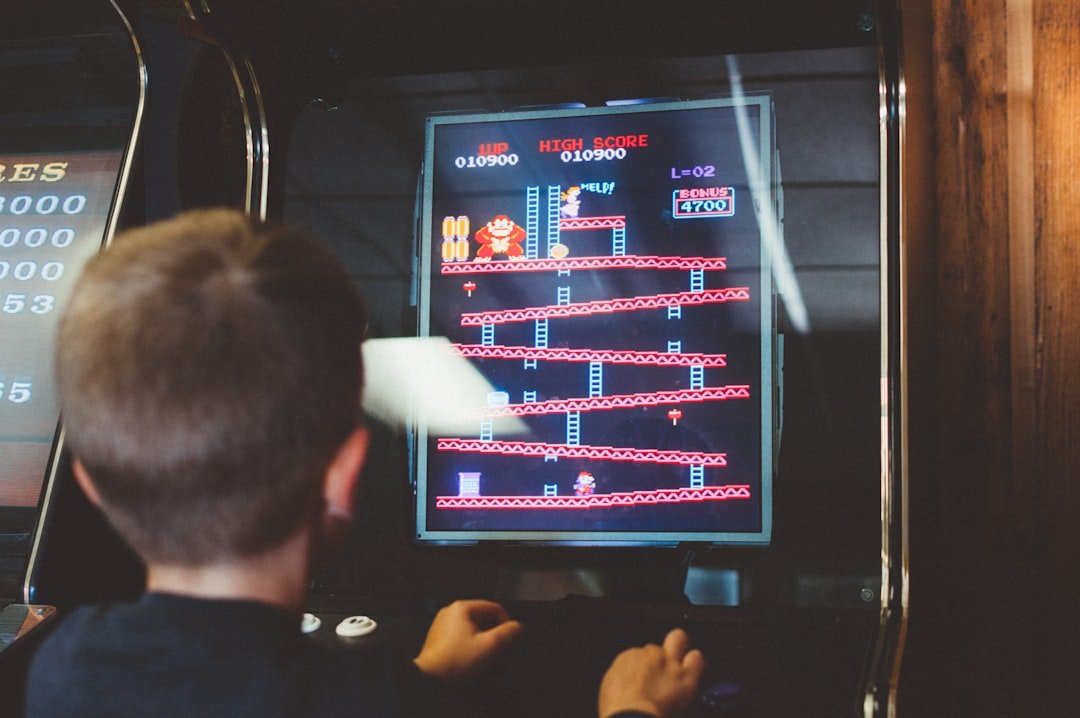
Split screen showing fighting game player watching opponent's character positioning and animation startup frames
Elite players read subtle positional and animation cues to predict actions before they complete
Photo by Kelly Sikkema on Unsplash

Mind Trick #2: The Quiet Eye Technique

Discovered by Dr. Joan Vickers at the University of Calgary, the Quiet Eye technique has revolutionized how we understand visual attention in high-performance scenarios. Research published in Current Issues in Sport Science shows that elite performers maintain a steady, focused gaze on critical targets for longer periods than novices—and this visual stability directly correlates with faster, more accurate responses.

The Quiet Eye refers to the final fixation on a target before initiating movement. In basketball free throws, elite shooters maintain Quiet Eye fixation for 400-600 milliseconds before shooting, while novices average under 200 milliseconds with more scattered gaze patterns. The same principle applies across domains: tennis players fixate on the ball's contact point, gamers lock onto opponent positioning or UI elements, and poker players focus on key decision-relevant information.

What makes Quiet Eye so powerful is that it reduces cognitive load. When your visual attention bounces between multiple targets, your brain must constantly reorient and process new information. By training yourself to identify and lock onto the most relevant visual target, you eliminate this processing overhead and free up cognitive resources for faster response generation.

Implementing Quiet Eye requires understanding what to focus on in your specific discipline:

For FPS Games: Focus on head-level positioning at common angles rather than scanning entire areas. Your peripheral vision handles movement detection; your focal vision should remain steady on high-probability target locations.

For Fighting Games: Lock onto your opponent's character model, specifically the hip/center mass area. This position allows you to detect movement in any direction through peripheral vision while maintaining stable central focus.

For Sports: Identify the ball or critical object early and maintain focus through contact. Tennis players should track the ball from opponent's racket to their own contact point without breaking fixation.

For Card Games: Establish a consistent focal point (often your own cards or the community cards) and use peripheral vision to monitor opponents rather than constantly shifting gaze.

0 of 5 completed 0%
  • Determine what visual element provides the most decision-relevant information

  • Use a timer and work up to maintaining 3-5 seconds of steady focus without gaze breaks

  • Train yourself to detect movement and changes in peripheral vision without shifting focal attention

  • Establish consistent gaze patterns that lead to Quiet Eye fixation before critical moments

  • If possible, use eye tracking or self-reflection to identify when your focus scatters during high-pressure moments

A common mistake is confusing Quiet Eye with tunnel vision. Quiet Eye maintains soft peripheral awareness while stabilizing central focus—you're not ignoring other information, you're simply processing it through peripheral vision rather than direct fixation. This distinction is crucial because complete tunnel vision actually impairs reaction time by eliminating your ability to detect unexpected stimuli.

Training Quiet Eye takes deliberate practice. Start by simply becoming aware of your gaze patterns during play. Most players discover their attention jumps erratically between multiple targets, especially under pressure. Once you're aware of this pattern, you can consciously work to establish and maintain focus on your identified critical point. Over 4-6 weeks of deliberate practice, this steady focus becomes automatic.

Mind Trick #3: Stimulus-Response Mapping

Every millisecond you spend deciding what to do is a millisecond you're not spending doing it. Stimulus-Response Mapping eliminates decision time by pre-loading specific responses to specific situations, transforming complex decisions into automatic reactions.

This technique leverages a well-established principle in cognitive psychology: practiced responses become procedural memory, which executes faster than conscious decision-making. According to research from the American Psychological Association, procedural responses can be 40-60% faster than novel decisions because they bypass the deliberative processing centers of the brain.

The process involves identifying high-frequency situations, determining optimal responses, and then drilling those pairings until they become automatic. Professional players do this intuitively through thousands of hours of practice, but deliberate mapping accelerates the process dramatically.

Creating effective stimulus-response maps requires systematic analysis:

Step 1: Situation Cataloging List the most common situations you face in your competitive discipline. For a fighting game, this might include: opponent jumps at you, opponent throws fireball, opponent dashes forward, you land a certain hit, etc. For tennis: short ball to forehand, deep ball to backhand, opponent approaches net, etc.

Step 2: Response Optimization For each situation, determine the highest-percentage response. This isn't about finding the "best" response in absolute terms—it's about finding the response that works well across the widest range of variations within that situation category.

Step 3: Explicit Pairing Create explicit "if-then" statements: "IF opponent jumps, THEN anti-air with this move." "IF ball lands short, THEN approach with inside-out forehand." Write these down and review them before practice sessions.

Step 4: Isolated Drilling Practice each pairing in isolation until the response feels automatic. Use training modes, ball machines, or cooperative practice partners to create repetitions of specific situations.

Step 5: Integration Testing Gradually reintegrate trained responses into full competitive play, monitoring whether they execute automatically under pressure.

Processing Type Speed Cognitive Load Flexibility
Novel Decision 300-500ms High Maximum
Trained Response 150-200ms Low Limited
Automated Mapping 100-150ms Minimal Situational

The limitation of stimulus-response mapping is reduced flexibility. When you automate a response, you sacrifice the ability to choose alternatives in the moment. This trade-off is generally worthwhile for high-frequency situations with clear optimal responses, but you should avoid mapping situations that genuinely require adaptive decision-making.

Advanced practitioners develop tiered mapping systems. First-tier maps cover the most common situations with completely automated responses. Second-tier maps cover less common situations with semi-automated responses that still involve some conscious selection. This tiered approach maximizes speed for predictable situations while preserving adaptability for novel ones.

One powerful application is mapping responses to your own mistakes. If you drop a combo in a fighting game, what's your automatic response? If you miss a shot in tennis, how do you reset mentally? Mapping recovery responses ensures you don't compound errors with slow, flustered follow-up play.

Flowchart diagram showing if-then decision tree for common gaming scenarios with response times
Mapping specific responses to specific triggers reduces decision-making time to near zero
Photo by GuerrillaBuzz on Unsplash

Mind Trick #4: Arousal Optimization

Your mental state dramatically affects your reaction time—and not always in the ways you'd expect. The Yerkes-Dodson law, established over a century ago and repeatedly validated by modern neuroscience, demonstrates that performance follows an inverted-U curve relative to arousal: too little arousal leads to slow, unfocused responses; too much arousal causes rushed, error-prone reactions; optimal performance occurs at a moderate arousal level that varies by individual and task.

Most players understand that being too relaxed hurts performance. What fewer recognize is that being too "amped up" is equally detrimental. High arousal states trigger the sympathetic nervous system, causing tunnel vision, reduced fine motor control, and—critically—impaired processing speed as the brain prioritizes threat detection over nuanced decision-making.

Arousal optimization training teaches you to recognize your current arousal level and adjust it toward your optimal zone. This involves both "psyching up" techniques for when you're under-aroused and calming techniques for when anxiety or excitement pushes you past peak performance.

Pros
  • Under-arousal leads to slow initial responses and missed stimuli
  • Optimal arousal maximizes both speed and accuracy
  • Slightly elevated arousal can enhance simple reaction tasks
  • Moderate arousal maintains peripheral awareness
Cons
  • Over-arousal causes rushed responses and increased errors
  • High anxiety triggers fight-or-flight, impairing fine motor control
  • Excessive excitement reduces strategic thinking
  • Panic states cause tunnel vision and processing breakdown

Techniques for Increasing Arousal (When Under-Energized):

  • Physical Activation: Brief intense movement—jumping jacks, fast walking, or even just clenching and releasing muscles—raises physiological arousal. Many esports players do quick physical exercises between games for this reason.

  • Music and Audio: Upbeat, high-tempo music activates arousal systems. Create a pre-competition playlist specifically designed to energize you.

  • Visualization: Mentally rehearse exciting competitive moments. Visualizing past victories or anticipated clutch situations increases arousal through anticipation.

  • Caffeine Timing: Strategic caffeine use (typically 30-60 minutes before competition) can raise arousal. Be cautious not to overdo it, which pushes into over-arousal territory.

Techniques for Decreasing Arousal (When Over-Excited or Anxious):

  • Controlled Breathing: The 4-7-8 technique (inhale 4 seconds, hold 7 seconds, exhale 8 seconds) activates the parasympathetic nervous system and reduces arousal within minutes.

  • Progressive Muscle Relaxation: Systematically tensing and releasing muscle groups reduces physical manifestations of over-arousal.

  • Cognitive Reframing: Interpreting anxiety symptoms as excitement rather than fear. Research from Harvard Business School shows that reframing "I am anxious" as "I am excited" significantly improves performance under pressure.

  • Grounding Techniques: Focus on physical sensations (feet on floor, hands on controller/equipment) to interrupt spiraling anxious thoughts.

The most important skill is accurate self-assessment. Many players have poor awareness of their arousal level, interpreting optimal arousal as "not caring enough" or over-arousal as "being in the zone." Developing accurate interoception—the ability to sense your internal state—allows you to make appropriate adjustments.

Keep a performance journal tracking your perceived arousal level (1-10 scale) before competitive sessions alongside your results. Over time, patterns emerge revealing your personal optimal zone. Some players perform best at 6/10 arousal while others need 8/10. This data transforms arousal optimization from guesswork into science.

Between-game routines are prime opportunities for arousal adjustment. Professional players often have specific rituals between rounds or matches designed to maintain optimal arousal—taking a drink, adjusting equipment, specific stretches. Develop your own routine that includes an arousal check and appropriate adjustment technique.

Mind Trick #5: Attention Chunking and Cognitive Load Reduction

Your brain has limited processing bandwidth. When that bandwidth is consumed by managing multiple separate information streams, reaction time suffers because there's less cognitive capacity available for response generation. Attention chunking reorganizes information into consolidated units that require less processing overhead, freeing up bandwidth for faster reactions.

The concept comes from cognitive psychology research on expertise. Chess masters don't see 32 individual pieces—they see meaningful configurations like "kingside castle structure" or "open file advantage." This chunked perception allows them to process the board state faster than novices who must track each piece individually. The same principle applies across all competitive domains.

How Chunking Works in Practice:

In a MOBA game, a novice processes: "enemy champion, their health bar, their position, their ability cooldowns, my health bar, my ability cooldowns, minion positions, ally positions..." Each element consumes processing bandwidth.

An expert chunks: "winnable 2v1 opportunity" or "danger zone, retreat pattern needed." The same information gets processed, but it's consolidated into meaningful game-state categories that trigger pre-planned responses.

In tennis, a novice tracks: ball position, ball speed, spin direction, opponent position, court position... An expert chunks: "attacking opportunity off weak second serve" or "defensive neutral rally."

The chunking doesn't happen automatically—it requires deliberate development. You must explicitly identify and name the meaningful configurations in your discipline, practice recognizing them rapidly, and associate them with strategic implications.

0 of 6 completed 0%
  • List 10-20 common situations that occur repeatedly in your competitive discipline

  • Create clear, memorable labels for each game state (e.g., 'scramble defense,' 'pressure window')

  • Identify the minimum visual/audio information needed to recognize each chunk

  • Link each chunk to appropriate strategic responses, connecting recognition to action

  • Use video review to rapidly identify and name chunks, building automatic recognition

  • Call out chunk names during practice play to reinforce the recognition-naming connection

Reducing Background Cognitive Load:

Chunking addresses active information processing, but background cognitive load also impacts reaction time. Mental energy spent on worries, self-criticism, or irrelevant thoughts reduces available bandwidth. Effective competitors develop techniques to minimize this background noise.

Externalize Non-Urgent Processing: If you notice yourself thinking about strategic adjustments mid-match, externalize the thought by making a brief note (or mental note with a specific retrieval cue) and return full attention to the present moment.

Develop Automatic Habits: Every decision that can be automated saves cognitive bandwidth. Equipment settings, warm-up routines, between-point rituals—all should be so habitual they require zero conscious attention.

Simplify In-Game Decision Trees: Many players overcomplicate their strategic options. Having three responses to a situation saves more bandwidth than having eight, even if the eight options include marginally better choices in specific circumstances.

The goal is to arrive at competitive moments with maximum available cognitive bandwidth dedicated purely to stimulus detection and response execution. Everything else should be chunked, automated, or externalized.

Brain diagram showing information processing pathways with chunked versus fragmented information flow patterns
Chunking consolidates information streams, reducing cognitive load and freeing bandwidth for faster reactions
Photo by GuerrillaBuzz on Unsplash

Common Mistakes to Avoid

Understanding what to do is only half the equation. Many players sabotage their reaction time training through common errors that seem intuitive but actually impair progress. Avoiding these mistakes accelerates your development and prevents frustrating plateaus.

Mistake #1: Training Reactions in Isolation

Clicking circles in a reaction time app might improve your app score, but research consistently shows minimal transfer to actual competitive scenarios. Real reaction time involves sport-specific pattern recognition, contextual prediction, and trained motor responses—none of which develop from generic reaction games.

The Fix: Train reactions within your actual competitive context. Use training modes in your game, practice with purposeful sparring partners, or do sport-specific drills that incorporate realistic stimuli.

Mistake #2: Ignoring the Mental Component

Players often focus exclusively on physical speed—how fast they can move their hands or body—while ignoring cognitive processing time. Since cognitive processing typically accounts for 60-70% of total reaction time, this emphasis is exactly backwards.

The Fix: Track your reaction breakdowns. Video review can reveal whether your delays occur in recognition (cognitive) or execution (physical). Address the actual bottleneck rather than assuming it's mechanical.

Mistake #3: Training While Fatigued

Reaction time degrades significantly with mental and physical fatigue. Training in fatigued states teaches your brain patterns that won't serve you when fresh, and you're more likely to reinforce sloppy habits.

The Fix: Do focused reaction training when fresh, typically early in practice sessions. Save fatigued practice time for building endurance and maintaining skills under pressure, not developing new reaction patterns.

Mistake #4: Expecting Linear Improvement

Reaction time improvement follows a logarithmic curve—rapid initial gains followed by increasingly difficult incremental improvements. Players who expect continuous fast progress become discouraged and abandon effective training methods prematurely.

The Fix: Set realistic expectations. Measure your baseline, expect 10-15% improvement over 8-12 weeks of consistent training, and understand that further gains will come slower. Progress tracking should use rolling averages rather than session-to-session comparisons.

Mistake #5: Over-Relying on Reaction

Paradoxically, the players with the fastest reactions often rely on them least. They use prediction, positioning, and strategic choices to minimize situations where pure reaction matters. Over-focusing on reaction training can become an excuse to ignore these higher-level skills.

The Fix: View reaction training as one component of a complete competitive toolkit. The best players combine fast reactions with positioning that rarely requires them and prediction that makes "reactions" effectively instant.

Mistake #6: Inconsistent Training

Reaction time improvements require consistent neural adaptation. Sporadic training leads to inconsistent results and prevents the consolidation of gains. Your brain needs regular, repeated exposure to build and maintain faster processing pathways.

The Fix: Establish a sustainable training routine. Three 20-minute focused sessions weekly produces better results than one sporadic 2-hour session. Consistency matters more than intensity.

Mistake Common Result Correct Approach
Generic reaction games No competitive transfer Sport-specific training
Physical-only focus Plateau despite effort Cognitive + physical training
Fatigued training Sloppy habits reinforced Train fresh, endurance separate
Linear expectations Discouragement, quitting Logarithmic progress model
Reaction over-reliance Strategy neglected Balanced skill development
Inconsistent schedule No consolidation Regular, sustainable routine

Best Practices for Reaction Time Training

Following these expert-recommended practices will maximize your reaction time training results and ensure that improvements translate to competitive performance.

Establish Baseline Measurements

Before beginning any training program, establish clear baseline measurements. Use tools like Human Benchmark for generic reaction time, but more importantly, develop sport-specific measurements. Record yourself competing and measure your response times to common situations. This data enables meaningful progress tracking and helps identify which techniques produce the best results for you.

Prioritize Sleep and Recovery

Reaction time is highly sensitive to sleep quality. Research from the Sleep Foundation shows that even mild sleep deprivation (6 hours instead of 8) can degrade reaction time by 10-15%—potentially erasing weeks of training gains. Prioritize 7-9 hours of quality sleep, especially before important competitions.

Layer Techniques Progressively

Don't attempt to implement all five mind tricks simultaneously. Start with the technique that addresses your biggest bottleneck, practice it until it becomes natural, then add the next. Trying to consciously apply multiple new techniques creates cognitive overload that actually slows reactions.

Train in Progressively Challenging Contexts

Begin technique practice in low-pressure environments, then gradually increase difficulty and pressure as skills solidify. This progression builds robust skills that hold up under competitive stress rather than fragile improvements that disappear when stakes rise.

Incorporate Physical Exercise

Regular cardiovascular exercise improves overall cognitive function, including processing speed. Studies from the British Journal of Sports Medicine demonstrate that aerobically fit individuals consistently outperform sedentary counterparts on reaction time tests. Aim for at least 150 minutes of moderate cardio weekly.

Use Video Review Strategically

Record your competitive play and review it specifically for reaction-related moments. Identify situations where reactions were slow and analyze why: Was it recognition delay? Decision delay? Motor execution? This targeted analysis directs your training toward actual weaknesses.

Develop Competition-Specific Warm-Up Routines

Cold performance is always slower than warmed-up performance. Develop a consistent pre-competition warm-up routine that activates your reaction pathways without causing fatigue. This might include specific drills, visualization, physical movement, and arousal optimization techniques.

Track and Analyze Your Data

Maintain a training log documenting your practice sessions, competitive results, and subjective assessments. Note which techniques you practiced, your arousal levels, sleep quality, and performance outcomes. Over time, patterns emerge that reveal your optimal training and preparation strategies.

0 of 7 completed 0%
  • Use both generic tests and sport-specific measurements for complete picture

  • 7-9 hours nightly, with extra attention before competitions

  • Master each before adding complexity to avoid cognitive overload

  • 150+ minutes weekly for cognitive function benefits

  • Identify bottlenecks: recognition, decision, or execution

  • Consistent pre-competition activation protocols

  • Track all variables to identify what works for you personally

Frequently Asked Questions

Most people see measurable improvements within 4-8 weeks of consistent, focused training. Initial gains come relatively quickly as you optimize cognitive processing and implement prediction techniques. Expect 10-15% improvement in sport-specific reactions over this initial period. Further improvements continue but follow a logarithmic curve, with each additional gain requiring more effort. The key is consistency—sporadic training produces sporadic results.

Yes, research strongly supports the effectiveness of reaction training for older adults. While baseline reaction time naturally slows with age (approximately 1-2ms per year after age 24), training can significantly offset this decline. A study in the Journal of Gerontology found that older adults who engaged in cognitive training maintained reaction times comparable to untrained individuals decades younger. The five mind tricks in this guide are particularly effective because they optimize cognitive processing rather than trying to reverse neurological changes.

Generic reaction training games produce real improvements—in those specific games. However, transfer to other activities is limited because reaction time is highly context-dependent. You're not training a single 'reaction speed' attribute; you're developing pattern recognition, stimulus-response mappings, and predictive models for specific scenarios. For competitive improvement, train within your actual discipline or with exercises that closely simulate its visual patterns and motor demands.

Genetics do influence baseline reaction time, with neural signal transmission speed varying between individuals. However, the genetic component accounts for only about 30-40% of variation in competitive reaction scenarios. The remaining 60-70% comes from training, particularly cognitive processing optimization. Most people never approach their genetic ceiling because they don't train systematically. Unless you're already an elite competitor, genetic limits aren't your practical constraint—training methodology is.

Moderate caffeine intake (100-200mg, roughly 1-2 cups of coffee) can improve reaction time by 5-10% through increased alertness and arousal. However, excessive caffeine pushes arousal past the optimal zone, causing jitteriness and impaired fine motor control that worsens performance. Additionally, regular high caffeine use builds tolerance, eliminating benefits while creating dependency. For competitive use, strategic caffeine timing (30-60 minutes before competition) with moderate doses produces the best results without significant downsides.

Conclusion

Reaction time training isn't about developing superhuman reflexes—it's about optimizing the mental processes that determine how quickly you can perceive, process, and respond to competitive situations. The five mind tricks we've explored attack reaction time from different angles: predictive processing helps you act on information before it fully manifests; the Quiet Eye technique stabilizes visual attention for faster processing; stimulus-response mapping eliminates decision-making delays; arousal optimization ensures your brain operates at peak efficiency; and attention chunking frees cognitive bandwidth for faster response generation.

Implementing these techniques requires patience and deliberate practice. Start with the technique that addresses your biggest current weakness. If you frequently feel surprised by opponent actions, focus on predictive processing. If you notice scattered attention under pressure, prioritize Quiet Eye. If you freeze during critical decisions, work on stimulus-response mapping. Build competence in one area before layering additional techniques.

Remember that reaction time is just one component of competitive success. The best players combine fast reactions with positioning that minimizes reaction demands, prediction that makes reactions virtually instantaneous, and strategic thinking that creates favorable situations in the first place. As you train your reactions, don't neglect these higher-level skills that often matter more than raw speed.

The journey to faster reactions is ultimately a journey of understanding your own mind. Pay attention to when you feel fast and when you feel slow. Notice what mental states produce your best performances. Experiment with different techniques and track what works specifically for you. The framework provided here gives you the tools—but you must do the work of applying them to your unique competitive context.

Start today. Measure your current reaction times. Choose one technique to implement. Practice consistently for four weeks. Measure again. The improvement you see will motivate the continued work that transforms good reactions into great ones. In competitive environments where milliseconds matter, this investment in mental training pays dividends across every game you play.

Ready to Level Up Your Competitive Game?

Explore more strategy guides covering everything from game-specific techniques to mental performance optimization.

Browse Strategy Guides